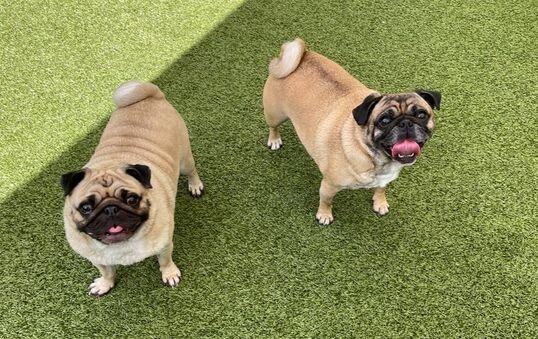
The piglet pups we all know and love, Pugs are one of the most adored dog breeds today. But did you know they’ve been around longer than most modern breeds? While many families treat their Pugs like royalty, their fascinating history might explain exactly why.
🏯Origin of the Pug
The Pug is one of the oldest dog breeds in the world, believed to date back to before 400 BC. Because of their long history, their exact origins are somewhat debated. Most experts agree that they originated in Asia, particularly China, and are related to other short-faced breeds such as the Pekingese.
There are alternative theories suggesting they may have descended from small bulldog-type dogs or were bred down from larger mastiff-type breeds like the Dogue de Bordeaux (French Mastiff), though these are less widely accepted.
The American Kennel Club officially recognised the Pug as a breed in 1885.
There are alternative theories suggesting they may have descended from small bulldog-type dogs or were bred down from larger mastiff-type breeds like the Dogue de Bordeaux (French Mastiff), though these are less widely accepted.
The American Kennel Club officially recognised the Pug as a breed in 1885.
🎎 Purpose
In Ancient China, as early as 400 BC, Pugs were highly prized companion animals owned by emperors. They were considered a symbol of status and were kept by members of high society. Some were even guarded by soldiers, highlighting their importance.
Throughout history, Pugs have continued to be associated with royalty and nobility. They were owned by notable figures such as Prince William II of Orange and have been featured in many artworks over the centuries.
Their role as lap dogs and loyal companions remains perfectly suited to the Pugs we know and love today.
Throughout history, Pugs have continued to be associated with royalty and nobility. They were owned by notable figures such as Prince William II of Orange and have been featured in many artworks over the centuries.
Their role as lap dogs and loyal companions remains perfectly suited to the Pugs we know and love today.
🐕 Appearance of the Pug
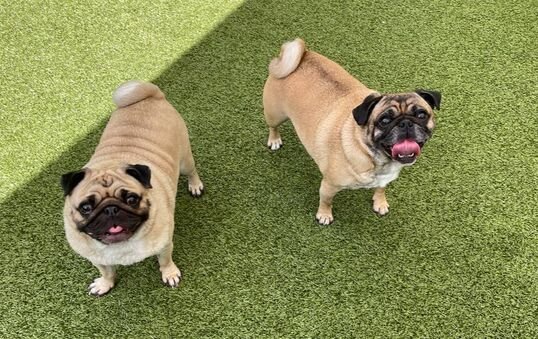
The distinctive, wrinkled face of the Pug is hard to miss. They have a compact, sturdy body, a large round head, and often greet you with their tongue slightly sticking out.
Their eyes are large and prominent, paired with small ears that sit atop their rounded head. Adding to their piglet-like charm, their tightly curled tail rests high over their back, supported by short, stocky legs.
Pugs come in two main colours: fawn and black. Coat types can vary slightly, but generally, fawn Pugs have a double coat, while black Pugs tend to have a single coat.
Males can grow up to around 36 cm and weigh up to 9 kg, while females are typically slightly smaller, reaching about 30 cm and up to 8 kg.
Their eyes are large and prominent, paired with small ears that sit atop their rounded head. Adding to their piglet-like charm, their tightly curled tail rests high over their back, supported by short, stocky legs.
Pugs come in two main colours: fawn and black. Coat types can vary slightly, but generally, fawn Pugs have a double coat, while black Pugs tend to have a single coat.
Males can grow up to around 36 cm and weigh up to 9 kg, while females are typically slightly smaller, reaching about 30 cm and up to 8 kg.
✂️ Coat Care
The Pug’s short coat is relatively easy to maintain, but they do shed year-round. Regular brushing—ideally a few times a week or daily—can help reduce loose hair around the home.
They should be bathed only when needed and thoroughly dried afterwards, especially within their skin folds. Moisture trapped in these folds can lead to irritation or infections such as hot spots.
Facial wrinkles and, in some cases, areas around the tail or hindquarters may require regular cleaning to remove dirt and buildup. If not cleaned properly, these areas can quickly develop sores or infections.
They should be bathed only when needed and thoroughly dried afterwards, especially within their skin folds. Moisture trapped in these folds can lead to irritation or infections such as hot spots.
Facial wrinkles and, in some cases, areas around the tail or hindquarters may require regular cleaning to remove dirt and buildup. If not cleaned properly, these areas can quickly develop sores or infections.
💖 A Pug’s Temperament
Pugs are entertaining, affectionate, and lively little dogs. They adore human companionship and are happiest when by your side.
They are intelligent and respond well to calm, consistent training, along with regular mental stimulation to prevent boredom, which can lead to destructive behaviour.
Pugs are not suited to living outdoors full-time. They are sensitive to both heat and cold and thrive in an indoor environment where temperatures are controlled and they can be part of family life.
Despite their small size, they are loyal and will bark to alert their owners to strangers. They are generally excellent with children and other animals, especially when well socialised from a young age.
Daily walks are important to keep their weight under control and to satisfy their curiosity, though exercise should be moderate.
They are intelligent and respond well to calm, consistent training, along with regular mental stimulation to prevent boredom, which can lead to destructive behaviour.
Pugs are not suited to living outdoors full-time. They are sensitive to both heat and cold and thrive in an indoor environment where temperatures are controlled and they can be part of family life.
Despite their small size, they are loyal and will bark to alert their owners to strangers. They are generally excellent with children and other animals, especially when well socialised from a young age.
Daily walks are important to keep their weight under control and to satisfy their curiosity, though exercise should be moderate.
🩺 Health
Unfortunately, Pugs are prone to several health issues, largely due to their brachycephalic (short, flat-faced) structure.
They are sensitive to temperature extremes—struggling in both cold weather and heat—and should not be left outside in harsh conditions.
Breathing difficulties are common, and some poorly bred Pugs may require corrective surgery to improve airflow, such as widening the nostrils or shortening the soft palate.
Other health concerns include allergies, skin conditions, mast cell tumours, and Pug Dog Encephalitis (an inflammatory brain disease).
Pugs are also prone to rapid weight gain, so careful management of diet and exercise is essential. Their short legs and breathing limitations mean they should not be over-exercised, and walks should be adjusted based on weather conditions. Close supervision during activity is important, as they can quickly become overexerted.
They are sensitive to temperature extremes—struggling in both cold weather and heat—and should not be left outside in harsh conditions.
Breathing difficulties are common, and some poorly bred Pugs may require corrective surgery to improve airflow, such as widening the nostrils or shortening the soft palate.
Other health concerns include allergies, skin conditions, mast cell tumours, and Pug Dog Encephalitis (an inflammatory brain disease).
Pugs are also prone to rapid weight gain, so careful management of diet and exercise is essential. Their short legs and breathing limitations mean they should not be over-exercised, and walks should be adjusted based on weather conditions. Close supervision during activity is important, as they can quickly become overexerted.
 |
 |
Written by We Love Dogs Care Team
Our passionate resort carers, Doggy Doaters, and canine specialists dedicated to providing 7-star boutique dog boarding, health care, and advice in Melbourne.